


 Android App
 About SPORTIVO Network
The Evolution of COD: Moving from Physical Cash to QR-on-Delivery
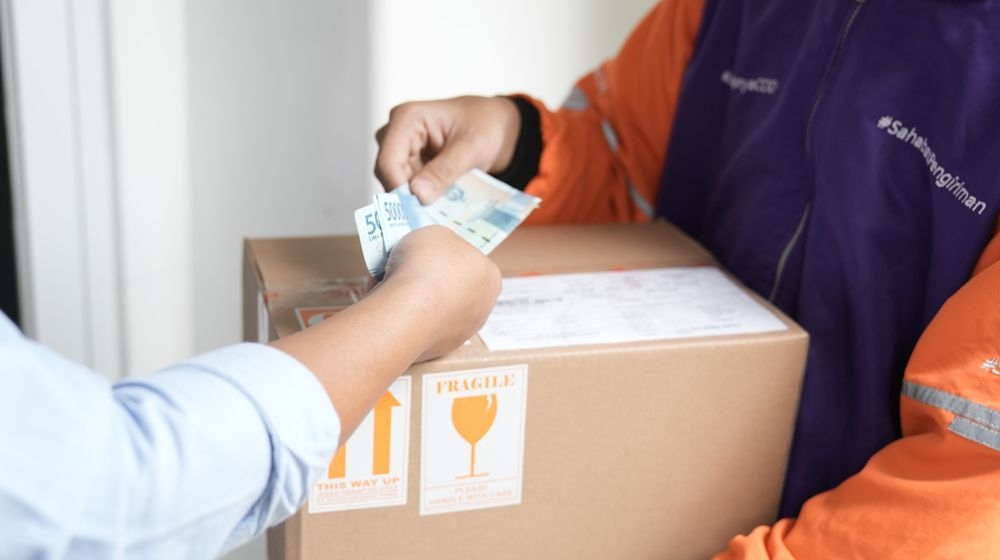
For many years, Cash on Delivery services have played a central role in the growth of e-commerce, especially in markets where customers prefer to pay only after receiving their products. This payment model allowed online retailers to build trust with first-time buyers who were hesitant about digital transactions. In simple terms, COD allows the buyer to pay for a product only when the parcel reaches their doorstep instead of paying during checkout.
However, as digital payment systems and logistics technology evolve, the traditional cash-based COD model is gradually transforming. A newer approach, often called QR-on-delivery or pay-on-delivery is emerging, where customers still pay at the doorstep but through digital methods like UPI or QR scanning.
The Traditional COD Model in E-commerce
Historically, COD was designed to reduce customer risk. Buyers could inspect or at least physically receive their package before making payment. This increased trust in online sellers and helped many e-commerce companies expand quickly.
The traditional workflow was fairly straightforward:
- A customer places an order online and selects COD as the payment option.
- The seller ships the parcel with an invoice attached.
- A delivery agent collects payment in cash when delivering the package.
- The courier deposits the collected money and later remits it to the seller after deductions.
While this process worked well for years, it also created operational challenges for logistics providers and merchants.
Rise of Digital Payments and QR Technology
India’s rapid digital payment adoption has significantly influenced the COD model. Systems like UPI and QR-based payments allow instant transactions directly between customer and merchant accounts.
Technologies such as BharatQR, introduced to support interoperable QR-based payments, enable customers to scan a code using mobile apps and transfer funds instantly.
This infrastructure opened the door for logistics companies to redesign COD workflows. Instead of collecting cash, delivery agents can present a QR code that customers scan to complete the payment. The process still happens at the doorstep but eliminates the need for physical cash.
The Emergence of QR-on-Delivery
QR-on-delivery, sometimes called “Pay on Delivery,” is essentially a digitized version of COD. Customers retain the flexibility of paying when the order arrives, but the payment happens through a mobile app or QR scan rather than cash.
Several logistics and fintech platforms now generate QR codes or payment links that delivery agents show to customers during delivery. Once scanned, the payment is transferred instantly to the merchant account, reducing delays and simplifying settlement processes.
This model improves operational efficiency in multiple ways:
- Instant payment confirmation
- Reduced cash management risk
- Faster merchant settlements
- Lower reconciliation workload
From the logistics perspective, it also reduces the complexity of handling cash during last-mile delivery.
Why QR-on-Delivery Is Becoming Popular
The transition toward QR-enabled payments at delivery is happening due to a combination of technological and behavioural factors.
First, smartphone penetration and digital wallets have increased dramatically. Second, customers have become more comfortable using UPI or QR scanning for everyday payments. Finally, logistics networks are becoming more technology-driven, integrating payment tools directly into delivery apps.
Government initiatives and digital payment infrastructure have also accelerated this shift toward cashless transactions in India’s commerce ecosystem.
The Future of COD in E-commerce Logistics
COD is unlikely to disappear completely in the near future. In many regions and customer segments, paying at delivery still provides reassurance and convenience. Instead, the model is evolving rather than fading.
In the coming years, the industry may see hybrid approaches where Cash on Delivery services continue to exist but increasingly rely on digital payment options like QR scanning, payment links, and mobile wallets.
The result is a more efficient version of COD: one that maintains customer trust while reducing operational friction for logistics providers and online sellers. As e-commerce and digital payments continue to grow together, QR-on-delivery may well become the default version of COD in modern last-mile logistics.

 Czech
Czech
 English
 Arabic
 French
 Portuguese
 Deutsch
 Turkish
 Dutch
Dutch
 Italiano
 Russian
 Romaian
 Portuguese (Brazil)
 Greek
Greek