


 Android App
 About SPORTIVO Network
Gold vs Real Estate: Which Asset Builds Stronger Wealth in India?
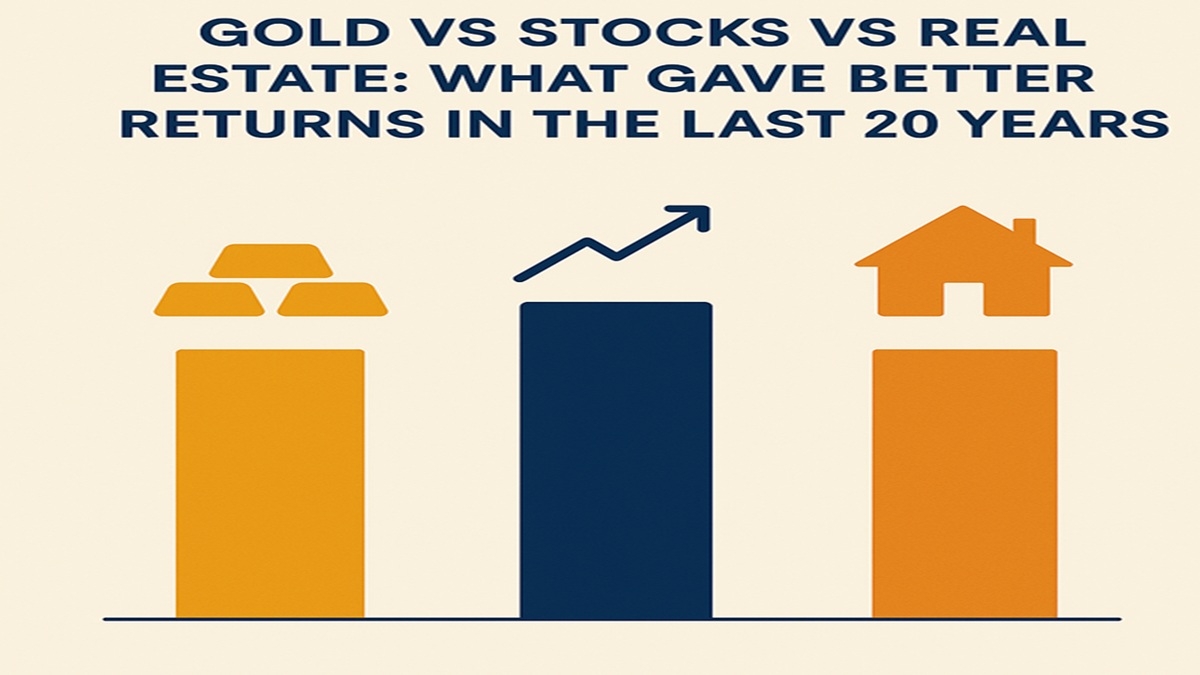
Investment discussions in India often revolve around two traditional asset classes: gold and real estate. Both have historically played significant roles in wealth preservation and long-term financial planning.
However, each asset class behaves differently depending on economic cycles, liquidity needs, and investment goals.
Understanding the strengths and limitations of both investments can help investors create a more balanced financial strategy.
Gold as a Wealth Protection Asset
Gold has long been considered a safe-haven asset in India. For generations, households have relied on gold as a store of value during times of economic uncertainty.
Gold offers several advantages:
-
High liquidity
-
Low maintenance
-
Protection against inflation
-
Easy conversion into cash
Because gold is widely traded across global markets, its value tends to remain relatively stable during periods of financial volatility.
Historical data also shows that gold prices have steadily increased over long periods. For example, the price of gold in India has grown significantly over the past four decades due to inflation and global economic factors.
Real Estate as a Wealth Creation Asset
While gold protects wealth, real estate offers opportunities to actively grow wealth through appreciation and rental income.
Property investments allow investors to benefit from rising land values, urban development, and infrastructure growth.
In addition to price appreciation, real estate generates recurring rental income, which can significantly increase total returns over time.
Another advantage of real estate is leverage. Investors can purchase property using loans, allowing them to control high-value assets with relatively smaller initial capital.
This financial leverage can amplify long-term gains when property prices increase.
Liquidity Comparison
Gold clearly has the advantage when it comes to liquidity. Investors can sell gold almost instantly through jewellery markets, banks, or commodity exchanges.
Real estate, however, requires more time to sell due to legal documentation, buyer negotiations, and transaction processes.
Despite lower liquidity, property remains attractive because it offers income generation, something gold cannot provide.
Risk and Market Cycles
Every investment carries some level of risk.
Gold prices fluctuate based on global economic factors such as currency movements, inflation expectations, and geopolitical events.
Real estate markets depend more on local factors including infrastructure development, employment growth, and population expansion.
Cities experiencing rapid urban growth often see stronger property demand, which supports price appreciation.
Why Investors Use Both Assets
Rather than choosing between gold and real estate, many experienced investors diversify their portfolios by holding both assets.
Gold provides stability during uncertain economic periods, while property generates income and long-term capital appreciation.
This combination helps balance risk and return across different market conditions.
Long-Term Investment Perspective
When evaluating gold vs real estate, it is important to consider long-term goals.
Investors seeking liquidity and wealth protection may prefer gold. Those looking for income generation and asset growth may find property investments more attractive.
Ultimately, the best strategy depends on an individual’s financial goals, risk tolerance, and investment horizon.
Conclusion
Gold and real estate serve different purposes within a diversified investment portfolio. Gold protects wealth during volatile market conditions, while real estate builds wealth through appreciation and rental income.
Understanding how these assets complement each other allows investors to create balanced strategies that support financial stability and long-term growth.

 Czech
Czech
 English
 Arabic
 French
 Spanish
 Portuguese
 Deutsch
 Dutch
Dutch
 Italiano
 Russian
 Romaian
 Portuguese (Brazil)
 Greek
Greek