


 Android App
 About SPORTIVO Network
Offshore Tax Preparation in 2025: Who Needs It, What It Costs, and What Happens If You Skip It ?
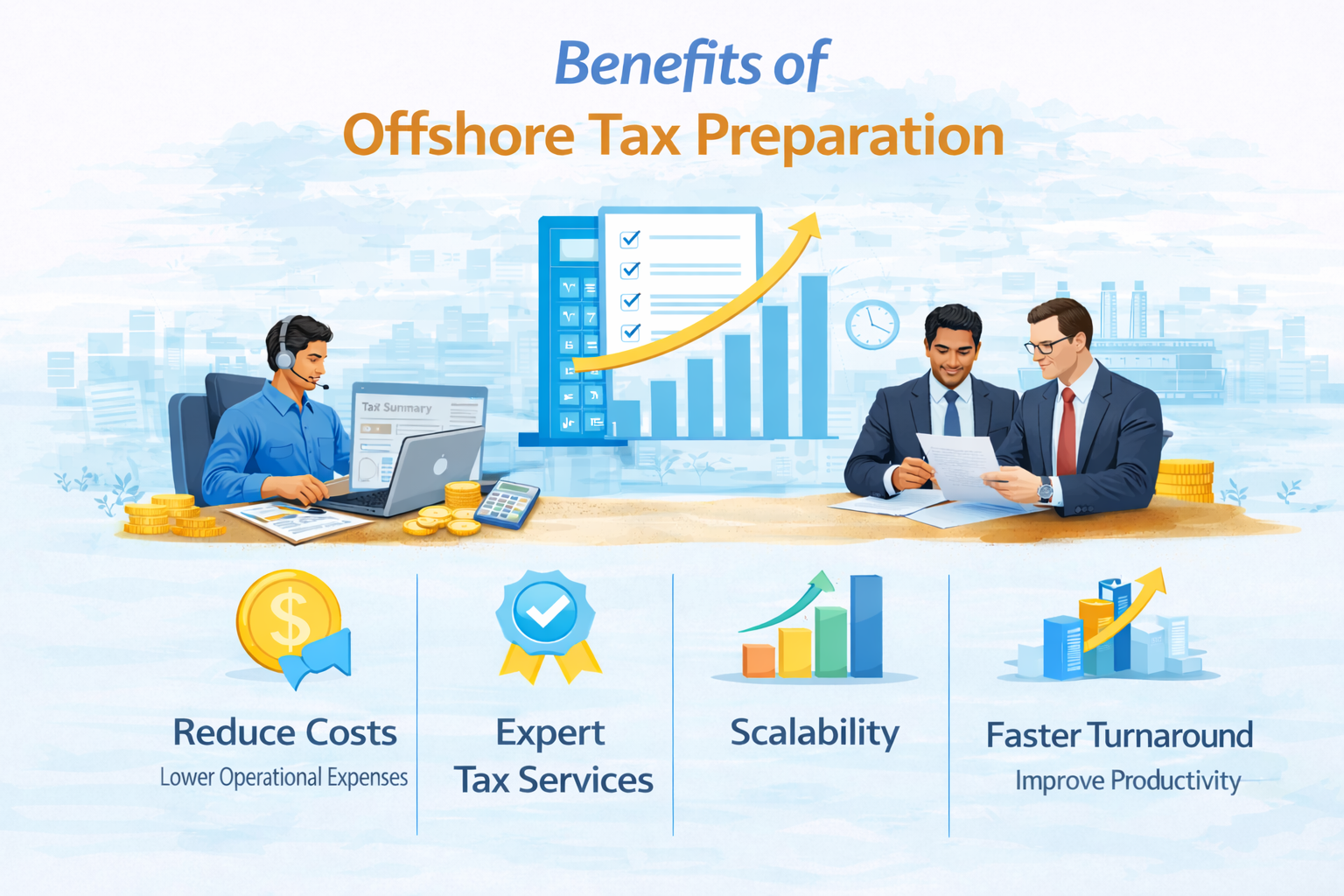
If you hold foreign bank accounts, earn income abroad, own overseas investments, or run a business with international operations, offshore tax preparation is not optional — it is essential. Yet it remains one of the most misunderstood areas of personal finance. For many global taxpayers, "offshore" carries an unjustified air of secrecy. In reality, it simply refers to the structured process of reporting and managing tax obligations that cross international borders.
This guide breaks down everything you need to know: what offshore tax preparation actually involves, who it applies to, what happens when you ignore it, and how to work with the right professionals to stay compliant while keeping more of what you earn.
What Is Offshore Tax Preparation?
Offshore tax preparation is the process of accurately reporting foreign-sourced income, assets, and financial accounts to your home country's tax authority — in most cases, the U.S. Internal Revenue Service (IRS). It is distinct from regular domestic tax preparation because it involves a layer of international compliance rules layered on top of standard filing requirements.
This includes filing documents such as the Foreign Bank Account Report (FBAR), IRS Form 8938 under FATCA (Foreign Account Tax Compliance Act), Form 2555 for the Foreign Earned Income Exclusion, Form 1116 for the Foreign Tax Credit, and in some cases, forms related to foreign corporations (Form 5471) or foreign trusts (Form 3520).
Who Needs Offshore Tax Preparation?
You need offshore tax preparation if any of the following apply to you:
You are a U.S. citizen or green card holder living abroad
You have a foreign bank account with a combined balance exceeding $10,000 at any point in the year
You earn income from foreign employment, freelance work, or investments
You own shares in a foreign corporation or partnership
You receive income from a foreign trust, inheritance, or gift above IRS thresholds
You are a non-U.S. citizen with U.S.-sourced income or assets
Many people assume offshore tax issues only apply to the ultra-wealthy. That is a dangerous misconception. Even a modest savings account held in a foreign bank can trigger mandatory disclosures and reporting obligations.
The Foreign Earned Income Exclusion and Foreign Tax Credit
Two of the most powerful tools in offshore tax preparation are the Foreign Earned Income Exclusion (FEIE) and the Foreign Tax Credit (FTC). The FEIE allows qualifying U.S. expats to exclude a significant portion of their foreign-earned income from U.S. taxation — in 2025, the exclusion amount is indexed to inflation and typically exceeds $120,000. The FTC, on the other hand, allows taxpayers to offset U.S. tax liability dollar-for-dollar with taxes paid to foreign governments.
Strategically combining these two provisions — something a qualified offshore tax professional can help you do — can dramatically reduce or in some cases eliminate your U.S. tax liability on foreign income entirely.
How to Choose the Right Offshore Tax Professional
Not every CPA or tax preparer is equipped to handle international tax situations. When seeking an offshore tax professional, look for the following qualifications and characteristics:
Enrolled Agent (EA) or CPA with demonstrated international tax experience
Familiarity with your specific country of residence or source of income
Working knowledge of applicable tax treaties and their implications
Experience with FBAR, FATCA, PFIC rules, and Form 5471 filings
Transparent flat-fee or clearly scoped pricing — offshore returns are complex and more expensive than domestic ones
Membership in organizations like the American Citizens Abroad (ACA) or AICPA
Expect to pay between $500 and $3,500 or more for a comprehensive offshore tax return, depending on complexity. That cost is almost always worth it when weighed against the potential penalties for non-compliance.
Offshore Tax Preparation and Tax Treaties: A Hidden Advantage
One of the most underutilized tools in offshore tax preparation is the network of bilateral tax treaties the United States maintains with more than 60 countries. These treaties are legally binding agreements designed to prevent the same income from being taxed twice — once by the country where it was earned and once by the U.S. They can reduce withholding tax rates on dividends, interest, and royalties, and in some cases, allow certain categories of income to be taxed exclusively by one country.
For example, a U.S. citizen working in Germany and earning a pension from a German employer may find that, under the U.S.-Germany tax treaty, that pension income is taxed only in Germany — not in the United States. Without knowing this provision exists, many expats file incorrectly and overpay for years. A qualified offshore tax preparer will map your income sources to the applicable treaty and apply the most favorable treatment the law permits.
Offshore Tax Preparation for Digital Nomads and Remote Workers
The rise of remote work has created an entirely new category of offshore taxpayer: the digital nomad. U.S. citizens who work remotely for American companies while living abroad may still owe U.S. taxes on their income — but they may also qualify for the Foreign Earned Income Exclusion, provided they meet either the Physical Presence Test (330 full days outside the U.S. in a 12-month period) or the Bona Fide Residence Test.
Complicating matters further, many countries now offer Digital Nomad Visas — Portugal, Spain, Costa Rica, and Indonesia among them — which establish local tax residency and create additional filing obligations in the host country. A dual filing requirement (U.S. plus host country) demands a tax preparer who understands both systems and can structure your filings to avoid double taxation efficiently.
When to Start Offshore Tax Preparation
Timing is everything in international tax planning. The best moment to engage an offshore tax professional is before you move, open a foreign account, or begin earning foreign income — not after. Pre-move tax planning allows you to make strategic decisions about domicile, account structure, and income timing that can dramatically reduce your exposure. Once money has moved and accounts have been opened, your options narrow considerably.
If you are already abroad and have not been filing, act immediately. The IRS Voluntary Disclosure Program and the Streamlined Filing procedures remain available — but only until the IRS opens an examination against you. Every month you delay is a month closer to losing those options entirely.
Offshore tax preparation is ultimately about clarity and control: knowing exactly what you owe, to whom, and by when — and using every legal provision available to minimize that burden. With the right preparation, international tax complexity becomes an advantage rather than a liability.
Common Mistakes in Offshore Tax Preparation
Several recurring errors plague expats and international investors who attempt to navigate offshore tax preparation without professional help:
Assuming foreign taxes eliminate U.S. filing requirements. Paying taxes in another country does not excuse you from U.S. filing obligations. These are separate and cumulative responsibilities.
Missing the FBAR deadline. The FBAR is due April 15, with an automatic extension to October 15. It is filed separately from your tax return through FinCEN, not the IRS — a detail many filers miss entirely.
Ignoring passive foreign investment companies (PFICs). Foreign mutual funds and certain foreign investment vehicles are classified as PFICs and taxed under punishing default rules unless the taxpayer makes a timely election.

 Czech
Czech
 English
 Arabic
 French
 Spanish
 Portuguese
 Deutsch
 Turkish
 Dutch
Dutch
 Russian
 Romaian
 Portuguese (Brazil)
 Greek
Greek