


 Android App
 About SPORTIVO Network
Reducing Weight in Precision Joints: RA Cross Roller Bearings
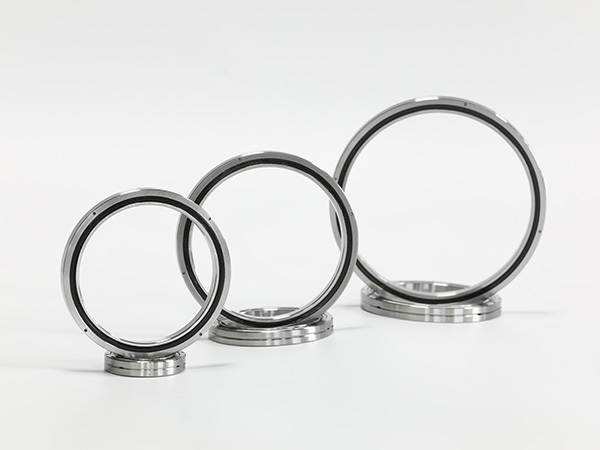
In precision engineering, the biggest headache is often the "bulk" of standard hardware. When your robotic arm or medical scanner becomes too heavy, the motors struggle, energy costs spike, and the entire system loses its agility.
I have seen many B2B projects stall because standard bearings simply won't fit into the sleek, compact housings required for modern automation. Forcing a thick component into a tight space usually leads to overheating and early failure.
The solution lies in a thin-section design that doesn't compromise on load capacity. By using a crossed roller arrangement in a slim profile, you can maintain sub-micron accuracy while significantly reducing the overall weight of your machine.
The Problem of "Inertia Lag" in Compact Robotics
In the B2B world of high-speed automation, every gram matters. When a robotic joint uses a heavy, oversized bearing, it creates "inertia lag." This means the motor has to work harder to start and stop the movement, leading to "overshoot" errors. A RA cross roller bearing is specifically designed to solve this.
The RA series is a "thin-section" type. It features an extremely small cross-sectional area compared to its inner diameter. This allows engineers to pass cables, air lines, or shafts through the center of the bearing without making the joint bulky. If your current system is sluggish or the motors are running too hot, the mechanical weight of the rotating assembly is likely the culprit.
Solving Tilting Moment Instability
One might assume that a "thin" bearing would be flimsy, but the RA cross roller bearing uses a unique 90-degree V-groove raceway. This allows a single, slim bearing to handle:
-
Radial Loads: Pushing from the side.
-
Axial Loads: Vertical pressure.
-
Moment Loads: The "tipping" force when a load is cantilevered.
Because the cylindrical rollers have "line contact" with the raceway, they offer much higher stiffness than ball bearings of the same size. This prevents the "bending" or "flexing" that often ruins the precision of optical instruments or radar pedestals. If your equipment is suffering from "wobble" during rotation, the line contact of a crossed roller is the mechanical fix you need.
Managing Friction in Thin-Section Designs
A common failure in thin bearings is "warping" during installation. Because the rings are so slim, if the housing isn't perfectly flat, the bearing ring will follow the curve of the housing. This creates "tight spots" where the rollers pinch, causing high friction and noise.
To solve this:
-
Precision Housing: Ensure the mounting surface is ground to a high degree of flatness.
-
Gentle Preload: Use a "light" preload for RA series components. Over-tightening a thin-section bearing will lead to "brinelling" (permanent dents in the race) almost immediately.
-
Correct Lubrication: Use a grease with a low starting torque. Since RA bearings are often used in delicate sensors, a heavy, "sticky" grease will interfere with the sensitivity of the equipment.
The Challenge of Thermal Expansion
In B2B medical and semiconductor applications, machines often run in temperature-controlled environments, but the bearings themselves still generate internal heat. Because the RA cross roller bearing is so thin, it reacts quickly to temperature changes.
If the shaft expands faster than the housing, the internal clearance of the bearing disappears. This is why we often recommend using materials for the housing that have a similar "Coefficient of Thermal Expansion" (CTE) as the bearing steel. For high-precision tasks, stainless steel RA models are available to resist corrosion and provide better thermal stability in fluctuating environments.
Maintenance and Sealing in Slim Profiles
Many engineers worry about contamination in thin bearings. Because there is very little space for a traditional heavy-duty seal, RA bearings often use "integrated labyrinth seals" or small rubber shields.
-
Dust Protection: If your B2B application is in a dusty factory, you must provide external shielding.
-
Relubrication: Most RA models have a small oil hole on the outer ring. Regular, small doses of lubricant are better than one large "re-greasing" session, as it prevents the seals from being blown out by internal pressure.
By focusing on these small maintenance details, you can ensure that your lightweight, high-precision joints last for millions of cycles without losing their accuracy.
Conclusion
As a premier manufacturer and supplier, Yuwei Bearing delivers lightweight, high-rigidity RA cross roller solutions. Trust our factory-direct products to optimize your B2B precision needs.

 Czech
Czech
 English
 French
 Spanish
 Portuguese
 Deutsch
 Turkish
 Dutch
Dutch
 Italiano
 Russian
 Romaian
 Portuguese (Brazil)
 Greek
Greek