


 About SPORTIVO Network
How Does Robotic Laser Welding Improve Production Accuracy
Introduction
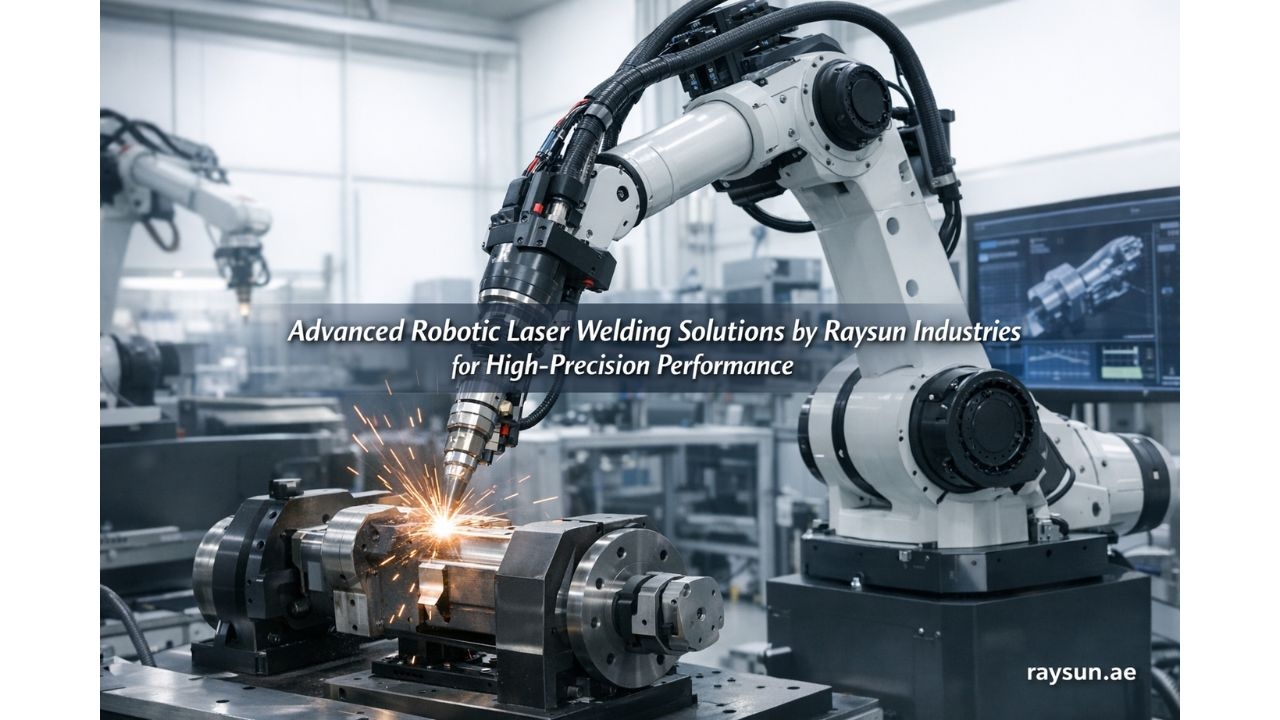
When you think about manufacturing, you might imagine sparks flying and people in heavy masks holding torches. While that’s still a thing, the world of high-end production has shifted toward something that feels a bit more like science fiction. I’m talking about Robotic Laser Welding. This isn't just about sticking two pieces of metal together; it’s about using a literal beam of light, guided by a computer-controlled arm, to create seams that are nearly perfect. In modern factories where every millimeter counts, Robotic Laser Welding has become the secret weapon for getting things exactly right the first time.
Why Accuracy Matters in the Big Picture
Precision isn't just a nice-to-have feature; it’s the difference between a product that lasts a decade and one that falls apart in a week. Think about a car door or a medical device. If the weld is off by even a tiny fraction, the parts won't fit, the structure weakens, and money is wasted.
Traditional manual welding is an art form, but humans have bad days. We get tired, our hands shake slightly, and we can’t always see the microscopic gaps in a joint. A robot, however, doesn't need coffee or a lunch break. It follows a digital map with zero hesitation. By using a concentrated laser, the heat is focused on a very tiny spot. This means the surrounding metal doesn't warp or melt unnecessarily, keeping the entire part in its original, intended shape.
Note: Raysun Techno Industries LLC offers comprehensive Robotic Laser Welding solutions tailored to the automotive and aerospace sectors. We focus on reducing waste and improving cycle times through highly efficient laser-based automation. Ready to modernize your manufacturing process? Connect with our specialists today for a detailed service quote.
Key Features of Robotic Laser Welding
What makes this setup so much better than the old-school ways? It’s all about control. Here are a few things that set it apart:
-
Extreme Focus: The laser beam is incredibly narrow. Imagine trying to draw a line with a blunt crayon versus a needle-sharp pencil. The laser is the needle.
-
Speed without Sacrifice: Usually, when you go faster, you get sloppier. Robots can move at high speeds while maintaining that needle-sharp accuracy.
-
Smart Sensors: Many of these systems use vision (cameras and sensors) to track the seam in real-time. If the metal is slightly bent, the robot adjusts its path instantly.
-
Minimal Heat Distortion: Because the beam is so fast and focused, the metal doesn't have time to get heat-soaked, which prevents the parts from twisting out of alignment.
How Robotic Laser Welding Lowers Human Error
In a typical workshop, a welder has to manage the torch angle, the speed of their hand, and the amount of filler material all at once. It’s a lot to juggle. When you automate this, you remove the oops factor.
The robot uses a Fiber laser source to generate the power needed to fuse the metal. This light is delivered through a flexible cable, allowing the robot arm to twist and turn into tight spots that a human could never reach comfortably. Because the computer controls the energy output to the exact watt, the weld depth is consistent every single time. You don’t get those lumpy welds or spots where the metal didn't quite melt together. It’s smooth, clean, and incredibly strong.
Transforming the Factory Floor
Integrating this technology changes the whole vibe of a production line. Instead of a chaotic environment with lots of grinding and fixing mistakes, you get a streamlined flow.
Why the Shift is Happening
-
Less Scrap Metal: Since the accuracy is so high, you aren't throwing away ruined parts that didn't meet quality standards.
-
No Post-Weld Cleanup: Laser welds are so clean that you often don't need to grind off excess material or splatter. This saves a massive amount of time.
-
Consistency Across Thousands of Units: Whether it's the first part of the day or the 500th, the robot performs with the same level of precision.
-
Safe Environment: Keeping the high-energy light inside a shielded cell keeps workers safe from fumes and intense flashes.
Conclusion
At the end of the day, moving toward automation isn't about replacing the human touch; it's about giving us the tools to build things better than we ever could by hand. We are seeing a shift where quality is no longer a gamble. By focusing the power of light through a robotic lens, industries can create products that are safer, lighter, and more durable. If you are looking to bring this level of precision to your own operations, Raysun Techno Industries LLC is here to help bridge that gap between traditional craftsmanship and the high-tech future of manufacturing.

 English
 Arabic
 French
 Spanish
 Portuguese
 Deutsch
 Turkish
 Dutch
Dutch
 Italiano
 Russian
 Romaian
 Portuguese (Brazil)
 Greek
Greek