


 Android App
 About SPORTIVO Network
When Is the Right Time for Startups to Outsource Bookkeeping?
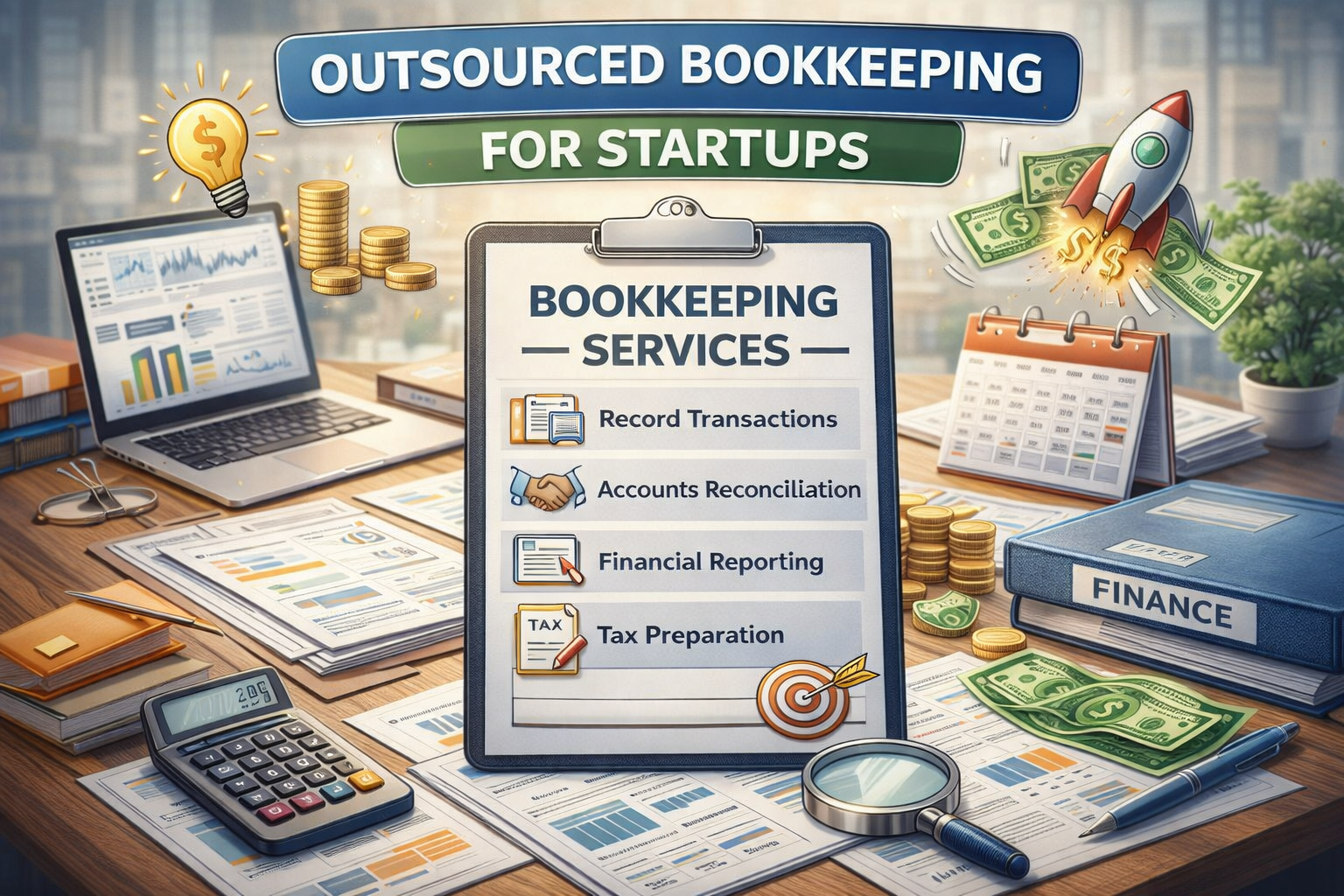
Outsourced bookkeeping means hiring an external individual or firm to manage your financial records, categorise transactions, reconcile accounts, and produce financial statements — instead of doing it yourself or bringing someone in-house.
For startups, this typically includes monthly reconciliation, accounts payable and receivable tracking, payroll coordination, expense categorisation, and preparation of reports your accountant or investors will need.
'The moment you stop treating bookkeeping as an afterthought is the moment your startup starts looking like a real business to the people who fund real businesses.
Why Startups Are Outsourcing Their Books?
The case for outsourcing is not just about cost — though the cost savings are real. It is about what you gain in return.
01
Professional Accuracy
Dedicated bookkeeping firms have trained professionals who work within your accounting software daily. Errors that creep into DIY spreadsheets simply do not survive that level of scrutiny.
02
Investor-Ready Financials
Due diligence moves faster when your books are clean. Outsourced bookkeepers produce the P&L, cash flow statements, and balance sheets that investors expect to see before writing a cheque.
03
Scalability Without Hiring
As your transaction volume grows, your provider scales with you — no onboarding, no benefits package, no HR headache. You pay for what you use.
If you are unsure whether it is time to outsource, these are the signals founders most often report before making the switch:
Your accountant keeps flagging errors that delay tax filings:
One thing founders often underestimate: The cost of bad books is not just the hours spent fixing them. It is delayed fundraising, tax penalties, cash flow blind spots, and decisions made on inaccurate data. Clean books from a professional are cheaper than correcting a year of DIY errors.
What to Look for in an Outsourced Bookkeeping Provider
Not every provider is built for startup needs. Before you sign on, ask these questions:
Do they specialise in startups?
Startup finances involve unique complexity — cap tables, equity compensation, R&D expense tracking, revenue recognition under SaaS models. A generalist firm may lack the context to handle these accurately.
What software do they work with?
Look for providers fluent in QuickBooks Online, Xero, or whatever platform your CPA recommends. Compatibility matters — switching tools mid-growth is a costly disruption.
How are deliverables and timelines structured?
You should expect reconciled books and financial reports within a defined window each month — not whenever they get to it. Confirm the service level agreement before committing.
Is your financial data secure?
Ask about data handling policies, access controls, and whether they use encrypted file sharing. Your financial records are sensitive; treat the question of data security with the same rigour you would apply to a software vendor.
How to Make the Transition Smoothly?
Switching from DIY or in-house bookkeeping to an outsourced model is simpler than most founders expect. The standard onboarding process looks like this:
Step one: Choose a provider and agree on scope. Define which services are included — reconciliation, payroll support, accounts payable, reporting cadence — and confirm your software setup.
Step two: Share access to your accounting software and bank feeds. A reputable firm will use read-only access or a dedicated login with appropriate permissions.
Step three: Provide historical records for the current fiscal year. Even messy, incomplete books give your new bookkeeper a starting point. They will clean and categorise from there.
Step four: Establish a monthly rhythm. Most providers operate on a monthly close cycle — books reconciled, reports delivered, any questions resolved, all within the first two weeks of the following month.
Conclusion:
Outsourced bookkeeping for startups is not about cutting corners. It is about putting a professional in the seat that handles your most critical operational data — your money — while you focus on building product, acquiring customers, and growing the business.
The founders who move fastest are the ones who can look at their numbers clearly, at any point in time, without spending a weekend untangling transactions. That kind of clarity does not happen by accident. It happens when you stop treating bookkeeping as an afterthought and start treating it as infrastructure.
Your runway deserves accurate books. Your investors will expect them. And your future self — the one preparing for a Series A, a due diligence process, or a difficult quarter — will thank you for getting this right early.

 Czech
Czech
 English
 French
 Spanish
 Portuguese
 Deutsch
 Turkish
 Dutch
Dutch
 Italiano
 Russian
 Romaian
 Portuguese (Brazil)
 Greek
Greek