Ultimate World Cup Rules Guide: Tiebreakers, VAR, Cooling Breaks And More
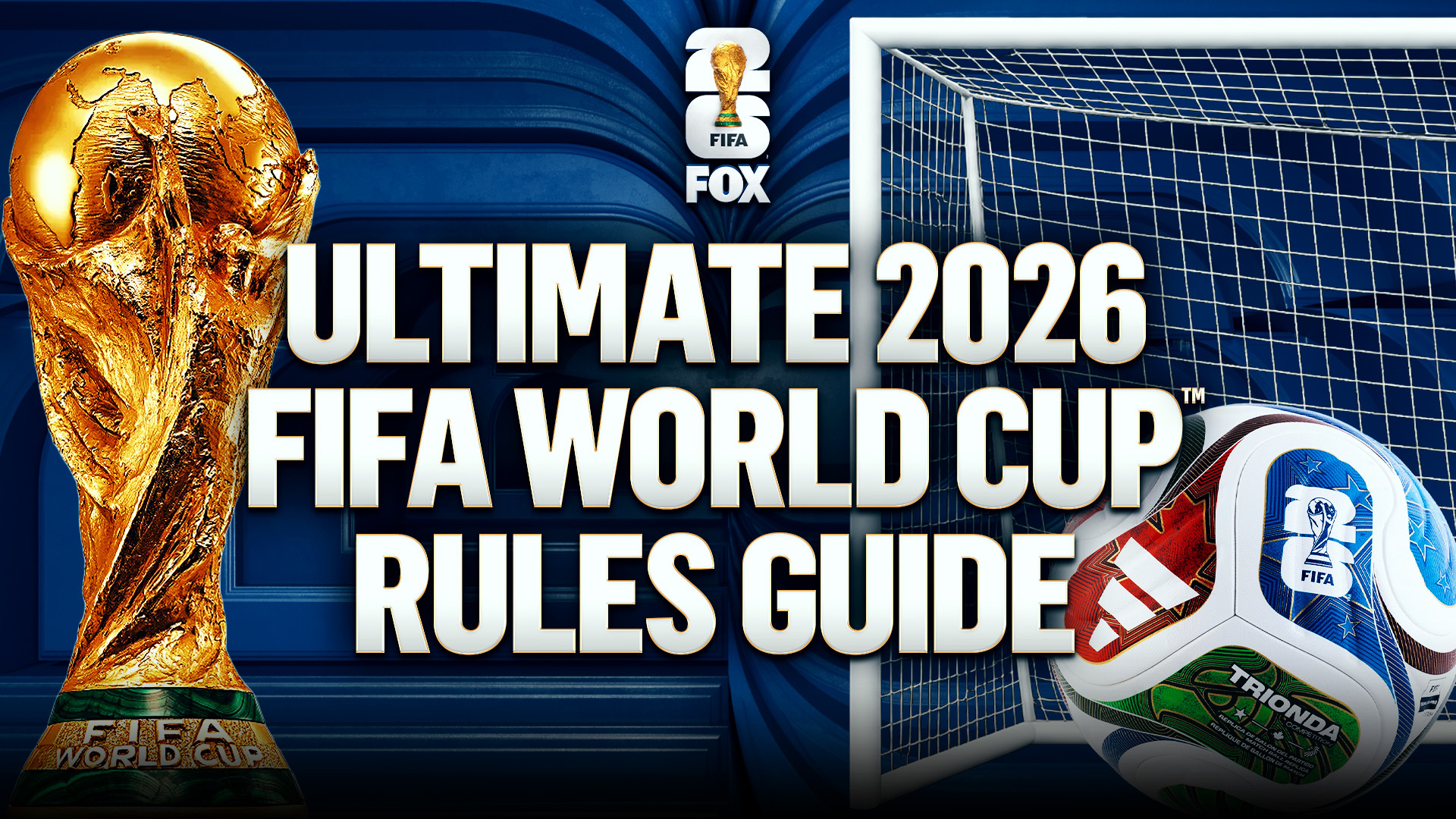
Wait, what just happened? Why did he get a yellow card? Why is he kicking from there? What's the deal with these water breaks? These are a handful of questions that fans during the 2026 FIFA World Cup may be asking, and we're here to deliver clear explanations. With the help of FOX Sports' World Cup rules experts Dr. Joe Machnik and Mark Clattenburg, both of whom are former referees we're breaking down major, simple and new rules to help guide you through the 48-team tournament. From new additions to tiebreaker rules to more VAR and so much more, we've got you covered. "The World Cup is the world's biggest soccer event, and therefore, what you have is different continents, different federations they all have their different interpretations when it comes to the laws of the game," Clattenburg said. "We have six federations, and they all have to come together under the same rules," Clattenburg added. "And what they have to understand is that FIFA [has] different interpretations." Here's our ultimate rules guide for the 2026 World Cup. JUMP TO: Tiebreaker Rules | Big Changes | VAR | Cooling-Off Breaks | Extra Time | Yellow/Red Cards | Penalties | Kicks | Handballs | Offside | Referees What Are The Biggest New Features For The 2026 World Cup? The 2026 FIFA World Cup will feature 48 teams, broken into 12 groups of four. It's a 16-team expansion from the 2022 World Cup, which featured 32 teams. The knockout stages will also include 16 more teams than in 2022, as 32 of the 48 teams will move onto play in the win-or-go-home elimination matches. There are three host countries: USA, Canada and Mexico, with 16 different cities hosting matches. What Are The 2026 World Cup Group Stage Tiebreaker Rules? When two teams are tied on points, there are seven different factors that ultimately determine their order. These tiebreakers separate group winners from runner-ups, which is important as group winners receive favorable knockout round opponents. These tiebreakers separate second-place from third-place finishers, which is notable as second-place finishers of each group automatically advance. Furthermore, these tiebreakers separate the eight out of 12 third-place teams that advance to the knockout stage. Here are the tiebreakers in order of importance: What Are The Biggest Rule Changes For The 2026 World Cup? The 2026 World Cup features new innovations to enhance the product on and off the pitch. The speed and flow of the match will never be smoother than at the 2026 World Cup, where officials will have the liberty to institute timers that speed up dead-ball restarts and substitutions. More so, players who wish to return after sustaining an injury will need to leave the pitch, which could deter embellishing. "We see players going down to stop the game whether they're injured or not," Machnik said. "But if the referee has to stop the game to deal with a player, that player will have to leave the field of play and will not be permitted to come back into the game for at least a minute." Additional rule changes include expanding the opportunities to use Video Assistant Review (VAR). VAR can now be used to determine corner kicks from goal kicks and challenge second yellow cards. There will also be cooling-off periods and water breaks that occur around the 22-minute mark of each half. "The game is going to look a lot different from the last World Cup, or from even international games that we've been watching throughout the soccer season," Machnik said. "It's going to be actually played in quarters. There's a mandatory three-minute cooling break in each half." So, What Exactly Changed To Enhance The Speed And Flow Of The Matches? Ahead of the World Cup, enhanced measures have been taken to improve the flow of matches. Referees will have the authority to institute a five-second timer if they feel players are taking too long over throw-ins and dead-ball goal kicks. They can institute a 10-second timer for substitutions if players are wasting time entering and leaving the pitch. If players take too long to sub, the player subbing in will have to wait one minute, Clattenburg explained. "The substitutions, I think, is a very good rule," Clattenburg said. "This is a big change in football because, many times, the substitution player takes his time leaving the field of play and nothing happens. We add the time on. Do we really get the added on time? I'm not sure. So this is a good message that if you take more than 10 seconds, the substitution player is not allowed on the field for one minute. A lot can change in one minute you can have a goal." Additionally, any player whose injury stops the run of play must remain off the pitch for a minute if they're healthy enough to return. This is meant to deter players from flopping as a way to waste time. "That's going to also enhance game flow and eliminate, hopefully, some of those opportunities where players fake injuries to stop game flow or whatever," Machnik added. How Does VAR Work? And How Has It Expanded For The 2026 World Cup? VAR is the abbreviation for Video Assistant Review. It's a system that helps the referee by reviewing decisions with video footage. "The whole purpose of VAR was to prevent a game from being decided on a clear and obvious era by the referee," Machnik said, noting that penalty kicks, offside, yellow or red cards and the ball crossing the goal line completely are the system's primary focus. It's like a combination of MLB's ABS which uses a completely automated system to review balls and strikes and the NFL's review system, which involves a team located in New York manually reviewing play and providing advice to the referees on site. "Every decision that the VAR makes where they're sending down a play for the referee to look at will come from Dallas," Machnik said. VAR can be used in a multitude of situations. When reviewing a goal, it mimics ABS, where an automated system determines if the soccer ball entirely crossed the plane of the goal. The same goes for reviewing an offside call an automated system informs the ref if the player was indeed beyond the last defender when their teammate passed the ball. VAR can also be used to determine a foul or penalty. In this case, the referee will watch back the action, oftentimes gaining advice from another group of officials, to determine if a foul occurred, should be held up or overturned. The same thing goes for a handball call. But even with VAR, infringements like these are ruled on at the ref's discretion. "We are talking about the best VARs in the world, and they have the best judgment when to interfere and not," Clattenburg said. "And I believe that we have the best referees in the world operating in this tournament, so you will see better decision-making." For the World Cup this summer, VAR's duties will be expanded. VAR will now help determine who was the last to touch a ball before it went out of bounds, resulting in a goal kick or corner kick. It can also be used if a player is awarded a second yellow card, meaning they'd be sent off. "I'm skeptical. I'm very nervous about this," Clattenburg said about a second yellow card scenario. "If they get it right, I think it could be a good moment. But if they don't get it right, I think football fans will be more frustrated." What Are The Cooling-Off Breaks At The World Cup? The cooling-off (or water) breaks are a new addition at the 2026 World Cup. Regardless of weather or other circumstances, there will be one each half of each game at the 22-minute and 67-minute mark. Each break lasts three minutes, and are instituted when a natural stoppage of play occurs around those minute marks. "This will not be exact because it depends on the motion of the match, and how the match is being played, and how natural it can be," Clattenburg said. "For example, if there was an injury, they will do the cooling break then. And they will do it in the second half at the same but not the exact moment 25 minutes, 22 minutes. It will be judged on [a natural] break." What Is Extra Time At The World Cup? Extra time is similar to "overtime" in most American sports. Starting in the knockout rounds, when two teams are tied at the conclusion of the 90 minutes of regulation, the match continues into extra time. Extra time consists of two 15-minute halves, regardless of how many goals are scored. If the two teams remain tied at the conclusion of those two separate 15-minute periods, the match will go to a penalty shootout. Substitution rules also change in games that extend to extra time. In regulation, each team is allowed five substitutions. In extra time, teams are awarded an extra one. How Do Yellow And Red Cards Work At The 2026 World Cup? Yellow cards and red cards are used to discipline players who commit unethical acts on the pitch, and sometimes off of it. Yellow cards are often given to a player upon first offense, especially if they commit a minor infringement or harmless tackle although warnings can be assessed in those situations, too. Red cards can be given upon first offense if a player commits an extremely harmful tackle or does something egregious to directly prevent a goal, like a purposeful handball or tackle inside the box. Red cards are also dealt when a player gets their second yellow in the same match. When you get a red card, you're ejected from the rest of that game plus, your team must play the remainder of the match down a player. Players will be suspended for one game if they are shown a yellow card in two group-stage games. Any yellow cards accumulated in the group stage, though, do not carry over to the knockout rounds. Players card tallies are wiped clean twice during the tournament: after the group stage and after the quarterfinal. How Do Penalty Kicks Work At The World Cup? The most pressure-packed scoring opportunity in soccer might be the one where no one is defending: the penalty kick. A "PK" is a one-on-one duel between a field player and a goalkeeper in which the field player tries to score a direct kick from the penalty spot. A penalty kick is awarded when a player commits a foul tripping, pushing or a handball inside the penalty area, which is a large 18-yard box that extends from the goal line into the field of play. The total width of the box is 44 yards. How Do Penalty Shootouts Work At The World Cup? First, they only happen in the knockout rounds and not during the group stage. But during the knockout rounds, if the score of a game is still tied after extra time, the winner is determined with a penalty shootout. So how does it work? Each team picks five players, each player will take a penalty kick and whichever team finishes with the most goals wins. However, if they're still tied after each team takes five penalty kicks, then they continue alternating shots until someone comes out on top. Penalty Kick, Corner Kick, Free Kick: What's The Difference? A penalty kick is taken from the spot 12 yards away from the goal. It's instituted when the official stops play for an infringement that occurred inside the box. Defenders must wait outside the box, and can't move until the penalty kick taker starts their motion. The goalkeeper has freedom of movement as they're the only opponent in between the penalty taker and the goal. A corner kick is taken from the flag parallel to the goalposts, 20 yards away from the goal on either side. It's instituted when a defending player kicks the ball beyond the out-of-bounds line behind the goal. Corner kicks are good opportunities to create scoring chances. Teams often cross the ball directly from the corner flag, seeking a header or shot on goal or pass it onto a teammate and try to work toward an attempt. Free kicks can be taken from anywhere inside the lines of the pitch. They are similar to penalty kicks, in which they are instituted after an infringement, such as an illegal tackle, handball or an offsides call. They offer opportunities to kickstart an attack or get an attempt on goal. Many players will shoot directly off the free kick if they feel they are close enough to challenge the goalkeeper. The opposing team has the right to set up a wall of defenders 10 yards from the spot of the free kick. What Is A Handball At The World Cup? The most important thing to remember is that FIFA has a different interpretation of what constitutes a handball compared with the federations, Clattenburg explained. And this can lead to confusion and anger. When the official calls a "handball", the opposing team receives a free kick from the spot of the infringement. If it occurs inside the box, they're awarded a penalty kick. Handballs are largely subjective to the official's discretion. If a player's hand which includes the entire arm up until the bottom of the armpit deliberately or unnaturally obstructs or aids the run of play, or a goal, from occurring, the official will whistle play dead and often show that player a card. "You will see probably less handballs than we see around the world of football," Clattenburg added. "Penalties will be less given for handballs with FIFA tournaments, and this is an understanding that it's not always consistent around the world." How Does Offside At The World Cup Work? Offside is an infringement a referee calls when an attacking player is behind the last defender when their teammate passes the ball or puts in a cross. If the ball ricochets off a defender to an attacking player in an offsides position, the official will whistle the play dead. But if a player with clear possession passes the ball to their teammate or the goalkeeper and an opponent in an offside position intercepts it, the official will not whistle the play dead. Offside rulings result in a free kick for the defending team from the spot of the infringement. Why Are There Three Referees On The Field During 2026 World Cup Matches? In all, there are 52 referees with a whistle and 20 VARS, Machnik said, noting that's more than 20 additional officials compared with Qatar in 2022. There are three officials on the pitch, each with different responsibilities. The center referee operates in the field-of-play, always hovering in the proximity of play to manage the action. The center referee calls fouls and penalties, and issues yellow and red cards. They signal the start of the match with their whistle, and the end of each half. There are two sideline officials. Their main duties are to determine if a player is offside. They decipher corner kicks from goal kicks, and which team was the last to touch the ball before it went out of bounds. Sideline officials can also advise the center referee on foul calls when they occur in their line of sight. There's a fourth official, who does not manage the action on the pitch. By holding a scoreboard, they signal the amount of injury time after each half and visually communicate substitutions. They also supervise the antics of the players on the bench and the manager. "The laws are all designed to keep the game safe for the players and enjoyable for the spectators," Machnik said. "As you get to know more about the game and enjoy it, you realize that it's not glorified keepaway. It's a real, a beautiful game." 2026 FIFA World Cup: How To Watch The 2026 FIFA World Cup will run from June 11July 19, 2026. Spread across three countries, the tournament will culminate with the final on July 19 at New York New Jersey Stadium in East Rutherford, New Jersey. All 104 tournament matches will air live across FOX and FS1 with every match streaming live and on-demand within both the FOX One and the FOX Sports app. The opening match on June 11 between Mexico and South Africa (3 p.m. ET) will stream for free on Tubi, as well as the USA's opening match against Paraguay on June 12 (9 p.m. ET).








 Czech
Czech
 English
 Arabic
 French
 Spanish
 Portuguese
 Deutsch
 Turkish
 Dutch
Dutch
 Italiano
 Russian
 Romaian
 Greek
Greek