


 Android App
 About SPORTIVO Network
SPORTS.YAHOO.COM
How algorithms are changing horse betting ... and outraging gamblers in the process
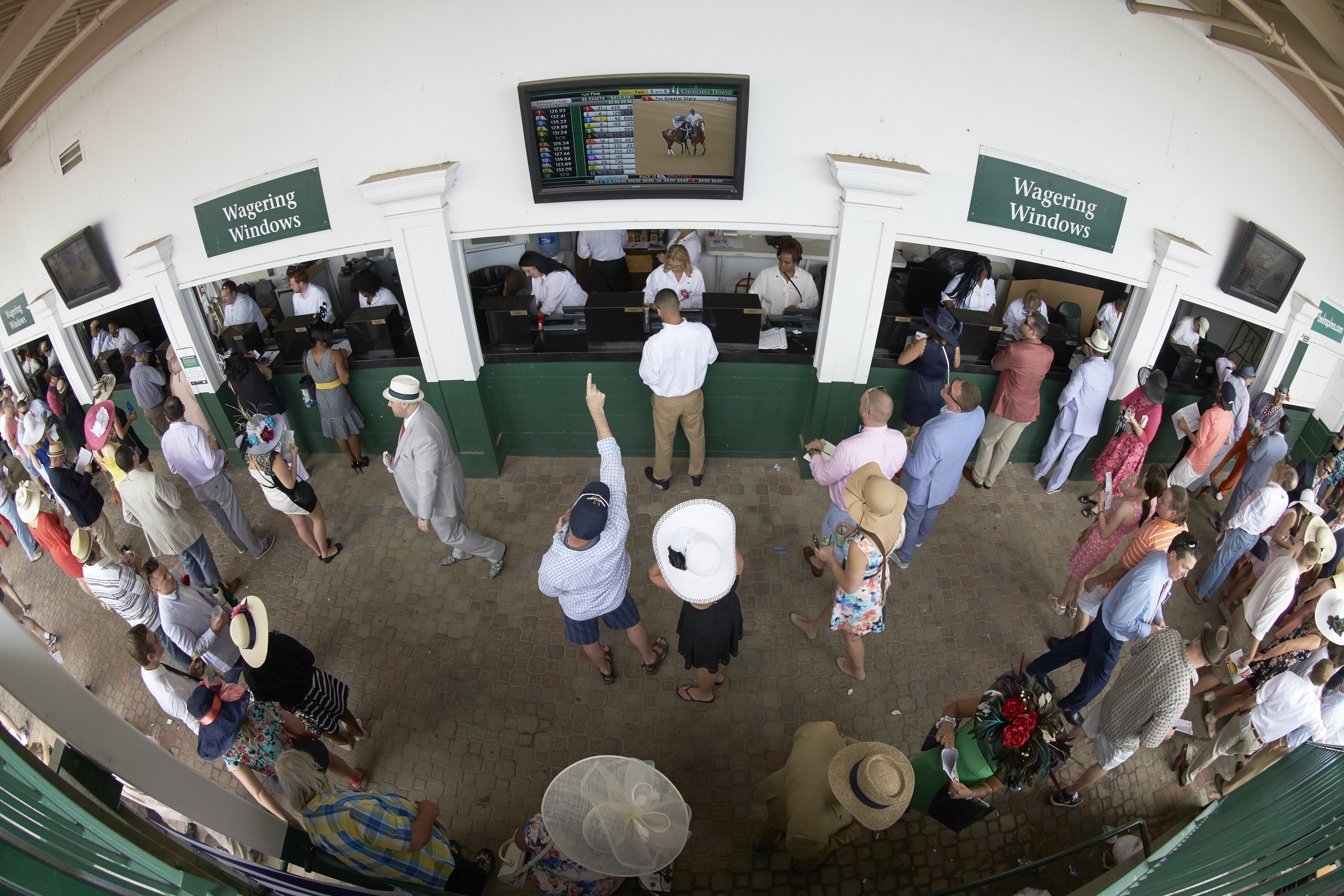
LOUISVILLE, Ky. The sixth race at Del Mar on a random Saturday last July should not have been memorable in any way. Running for an $81,000 purse, a 4-year old Thoroughbred named Nanci Griffith won the one-mile race and paid $14.80 to win on a $2 bet.But for many of those who backed the winner, the payout was a massive disappointment. As the gate opened, the tote board showed Nanci Griffiths odds at 18-1. When she crossed the wire, however, the odds had changed to 6-1, meaning those who held winning tickets collected less than half of what they might have expected at post time.Unlike sports wagering, where a bettor is playing against a bookmaker and locks in their odds at the time of the bet, American horse racing has long been based on a pari-mutuel system where the bettors are wagering against each other.Once all the money goes into a pool, the racetrack takes a fixed percentage off the top and whats left is divided up among the winning bets. As a result, the odds shown to the public on TV or computer screens are constantly shifting based on what percentage of total money is being bet on each horse.Gambling decisions at the racetrack, however, are often based on perceived value. Someone may be willing to bet on a horse at 7-1 but might think differently if the odds were 2-1. While odds changes are part of the game, someone who makes a bet 10 or 15 minutes before a race would typically not expect the final odds to be dramatically different from what they were at the time of the wager.That wasnt the case at Del Mar last July. Such a big drop in the blink of an eye the result of a massive bet on Nanci Griffith right before the gate opened was one of the more notable examples of a topic that has roiled horse racing and its most loyal gamblers in recent years.Known in horse racing circles as CAWs or Computer-Assisted Wagering syndicates these well-funded groups of professional gamblers have built algorithms to model horse races, track public betting patterns and make large wagers when they identify an inefficiency. Thanks both to technology and the special privileges some racetracks have given them, the CAWs are able to upload tranches of bets directly into the wagering pool at lightning speeds far faster than any regular player could do it on a phone app or at a racetrack window.The ability to do it at the very last moment sometimes significantly changing the odds for people who already made their bets has become both the subject of a class-action federal lawsuit filed in the Eastern District of New York and a source of frustration for some high-profile voices in the sport who believe it has created too much inequity between the heavily-capitalized professionals involved in CAWs and the common fan.Barstool Sports founder Dave Portnoy, an avid gambler and Thoroughbred owner, wrote on X last October that the CAWs have basically forced me to stop betting horses except the huge days like the Kentucky Derby or Breeders Cup. Hes certainly not alone in claiming that the rise of CAWs has impacted his play.I bet about one-third as much as I would on what I would call a prime bet for me because I just dont know where the odds are going to shift, said Rhodes College economics professor Marshall Gramm, a Thoroughbred owner and avid bettor who has finished as high as ninth place in the National Horseplayers Championship. The (syndicates) are smart. Part of my process now as a horseplayer is to watch the market. I spend as much time watching the market as I do handicapping the horses. I want to know whether the horse Im considering, how the market (views) that horse. Is it taking money? Do the (syndicates) like the horse? Do they not like the horse? Because theyre really good. Theyre very sharp.For the casual horse bettor, wagers are placed at a window at a track. But behind the scenes, large bets are being made electronically that are impacting odds dramatically. (Heinz Kluetmeier /Sports Illustrated via Getty Images)Heinz Kluetmeier via Getty ImagesWhat are CAWs and how do they work?There are, sources told Yahoo Sports, roughly two dozen of these prominent syndicates betting heavily at American tracks, including some that are based overseas. Though theres very little transparency about whos behind them, their influence is hard to miss because their money represents 30 to 40 percent of all dollars bet at certain tracks, according to industry experts.In a race like the Kentucky Derby, which drew $234.4 million worth of wagers last year, the influence of algorithm-based betting will be diluted to the point of being imperceptible.But on a regular weekday at a racetrack where the daily handle for a 10-race card might be more like $4 million, its a different story. In a race where there might be $300,000 in the pool, a large bet at the last minute would change the odds in a way that makes it much easier to differentiate the Pros from the Regular Joes.The sharpest players in the room have become a bigger percentage of overall handle, said Pat Cummings, executive director of the National Thoroughbred Alliance. As the market has changed, as more people are into modeling, as fewer of the rank-and-file horse players are betting, we have seen an increase in the number of late odds movements or a complete crashing of prices and its almost impossible for the general public whether youre playing on a computer, a mobile phone or standing at a window at the racetrack to react to it.Its a structural advantage these players have to be betting last, essentially being able to dump all their money (at once) and having access to get all their bets down in a way that the general public cant. That has both felt unfair and, I would say, disenfranchised a segment of loyal customers.Unlike sports books, where the top professional gamblers may be denied or limited in how much they can bet because of the risk they pose to the house, horse racing is based on an entirely different business model.With a 15 to 20 percent takeout of every dollar wagered going to the racetrack depending on the type of bet akin to the vig or juice at a sports book, which is typically closer to 5 percent volume is the name of the game regardless of who wins or loses.So not only are tracks taking CAW money, in many ways their business depends on it as sports gambling accessibility has expanded in the U.S. and horse racings share of total dollars wagered has decreased. Equibase, the industrys official data collection arm, reported in January that national overall handle fell to $11.03 billion for last year a 57% decline from its 2003 peak when adjusted for inflation.Thats why many racetracks have chosen to court the CAW dollars by offering partial rebates on the takeout for their bets, reducing the number of bets they need to win to turn a profit. While not an unusual arrangement tracks have made similar deals with their biggest bettors for decades it becomes a mathematical game-changer when CAWs are able to inject so much volume into the pari-mutuel pools after everyone else has bet a race.California-based handicapper Andy Asaro, who has a large social media following, compared it to a poker game where youre giving 15 percent of every bet back to one person and that person always has the button, meaning they have the advantage of being last to act.That creates a delicate balance for racetracks between the high-dollar, algorithm-based bettors that can influence odds in the blink of an eye and the core customer who might experience a sudden odds drop and feel like the system is stacked against them. The reality is, horse racing needs to satisfy both.I think when you start getting to the point where your core players are frustrated with the product, as the producer of that product we need to try to address that, Dave ORourke, the president and CEO of the New York Racing Association, told Yahoo Sports. And if theres ways of addressing it and costs to those ways, we need to be transparent and open with what were doing.In 2021, New York took the lead on addressing some of the odds volatility by cutting off CAW access to win pools at 2 minutes, 59 seconds before post time. Though it had the intended effect of stabilizing the odds on win bets, other tracks did not follow suit. After the Nanci Griffith situation and similar odds-dropping incidents last summer, the noise from gamblers got loud enough that Del Mar decided to adopt the same policy.In February of this year, NYRA announced an expansion of those guardrails to include a cut-off time at 1 minute, 59 seconds for other bets like exactas and trifectas. ORourke does not view that as a final solution but rather as another evolutionary step as AI modeling and other algorithmic technology continues to impact the industry.At the moment, though, New York is a bit of a lone wolf in aggressively addressing some of these concerns.In terms of the landscape of sports betting and other competitive products, we think its in our best interest to experiment with bringing down the volatility at the end of these cycles and thats what weve been doing, ORourke said. Having a much broader view of how it compares on a national level would be great because I cant tell you that weve found the answer. I dont think we have, actually. I think weve found a direction and the more we can keep pushing this and get wider adoption, maybe somebody will come up with a better solution than what were playing with right now.Odds for a large-handle race like the Kentucky Derby are not impacted by CAWs, but smaller handle races are susceptible to big odds changes. (Mike Coppola/Getty Images for Churchill Downs)Mike Coppola via Getty ImagesTechnology outpacing realityIn many ways, the controversy over CAWs comes down to technology outpacing the realities of pari-mutuel wagering.Invented in France in the 1800s in response to the notion that bookmakers were taking advantage of the public, the pari-mutuel system made a lot of sense when it came to America in the 1920s. And while professional gamblers and big-money syndicates have always existed, making large bets on horses used to be a laborious process requiring someone going to a racetrack with a lot of cash and standing in line for a teller who manually inputted wagers into the system.That began to change with the rapid expansion of simulcasting in the 1990s, where tracks or off-track betting parlors could take bets on races happening practically anywhere in the country. Now, much of the industry is fueled by advance-deposit accounts tied to betting apps that can be accessed by cell phone in many states.Using an algorithm to make high-volume bets, however, is changing the game to a degree many are uncomfortable with. While horse racing is ultimately unpredictable and practically impossible to conquer after all, youre relying on animals that cant tell us how they feel on a given day Gramm has tracked the probability models the syndicates are using. What he found is that the return on investment for horses whose odds drop dramatically due to CAW action is higher than on horses whose odds drift higher.Just last Wednesday at Keeneland, a horse in the eighth race named Vermelho showed 9-1 on the toteboard as it went into the gate, the fifth lowest odds in the 11-horse field. By the time the late money was calculated moments later, Vermelho had dropped to 4-1 and was second favorite. He won by a length, paying $10.50. Within minutes, social media was filled with outraged gamblers who felt that late CAW money had significantly watered down their expected payouts on the win bet and the exacta, which paid $18.12 on a $1 ticket.It was another piece of evidence pointing to Gramms thesis: the CAWs and their algorithms have become very, very good at picking winners, to the point where handicapping their movements might be more fruitful than handicapping the horses themselves.For a person who goes to their local racetrack once a year and bets a couple hundred bucks just to have a good time, they probably wouldnt even notice the difference. But for those who are trying to actually make money, it doesnt seem quite as democratic as the original pari-mutuel concept.We have a situation where the best players are getting to have the best technology and the biggest rebates, Gramm said. So not only are they cannibalizing longtime professional players, theyre intimidating casual players with the odds movements and it puts us in a horrible position to try to grow the game in the face of expanded gambling.Bettors are watching televisions that are broadcasting live racing from racetracks across North America. (Photo by Mike Campbell/NurPhoto via Getty Images)NurPhoto via Getty ImagesRace tracks are playing both sidesThe truth is, anyone with the know-how can build the kinds of models the CAWs are using to handicap races. There are, in fact, some retail products available that attempt to do the same thing.What the retail player doesnt have, however, is the direct access to the tote system syndicates are getting to upload their algorithm-fueled batch bets at a rate of more than six per second, which is the dividing line that determines whether an entity can be called a CAW.Not only are some racetracks granting that access, the track operators also have significant ownership stakes in the exclusive online wagering platforms CAWs use.The most prominent of those platforms, called the Elite Turf Club, is a partnership between 1/ST (also known as The Stronach Group, which owns Santa Anita and Gulfstream Park) and NYRA. The company is based in Curacao, which shields its clients from certain U.S. regulations (including some tax implications) and helps protect their privacy. Churchill Downs Inc., owns a comparable platform called Velocity.The coziness of that arrangement between the CAWs and the tracks themselves, combined with the fact that a regular gambler would not be able to make high-volume bets the same way on a standard betting app, is now the basis for a class-action lawsuit. Filed last October and amended in February, the lawsuit claims that the advantages given to CAWs are tantamount to rigging the betting pools and making it impossible for the regular consumer to participate in a true pari-mutuel pool.The lawsuit seeks unspecified compensatory damages and corrective action. It lists several defendants, including NYRA, Churchill Downs, AmTote (a platform that processes pari-mutuel bets) and Elite Turf Club.I think its a conflict of interest, attorney Karl Barth of Hagens Berman Sobol Shapiro LLP told Yahoo Sports. The tracks are supposed to be maintaining a fair pool for everybody but theres a profit incentive for them to allow this to happen. I think not allowing (CAWs) special access is the only fix. These minute cut-offs and things like that, we dont view them as a complete fix. The fix would be if everyone has the same access to the pools like its supposed to be in a fair pari-mutuel wagering system.As an industry, however, horse racing has shown little interest in sidelining CAW play and instead is nibbling around the edges with some tracks lowering takeout on certain bets and introducing some new bets (like odd vs. even) intended to entice the novice gamblers. Another measure getting some interest is the introduction of fixed-odds wagering pools, which the Kentucky legislature just voted to legalize last week.Others have different ideas about how to reduce the impact of CAW play, including whether takeout rebates could be awarded on a sliding scale to incentivize making their bets earlier, with the rebate amount decreasing the closer it gets to post time. In effect, that would potentially allow the CAWs to set the odds market for the public rather than overtake it with a surge of cash as the gates open. Another possibility, Gramm said, would be using a prediction market or an exchange market to manage win pools with fixed odds and then use pari-mutuel pools for all other bets.But as horse racing continues to fight for survival, doing nothing isnt an option.Horse racing needs all its customers, so we have to create the most amenable environment for retail players and high frequency players, Cummings said. The way that technology, data analysis, AI are going, we shouldnt just cut the legs out from the professionals and say we dont want them here. Thats anti-progress, anti-modernity, anti-technology. We should want more players to look at this and say, I can maybe throw this into Claude and try and code my own model. Our sport should be making data more readily available to consumers and see if more people can participate in this market.But being an active steward of your wagering product is needed. The construct of pari-mutuel wagering requires far more oversight in a highly connected era and up until six, seven years ago, there really wasnt much. Theres no exact answer to this because every decision you make or dont make has a reaction to what the markets going to experience. I think were more happy to see anybody doing something to say lets try and make the healthiest market we can for the greatest number of customers.
0 Comentários
0 Compartilhamentos
74 Visualizações
0 Anterior

 Czech
Czech
 English
 Arabic
 French
 Spanish
 Deutsch
 Turkish
 Dutch
Dutch
 Italiano
 Russian
 Romaian
 Portuguese (Brazil)
 Greek
Greek