


 About SPORTIVO Network
WWW.FOXSPORTS.COM
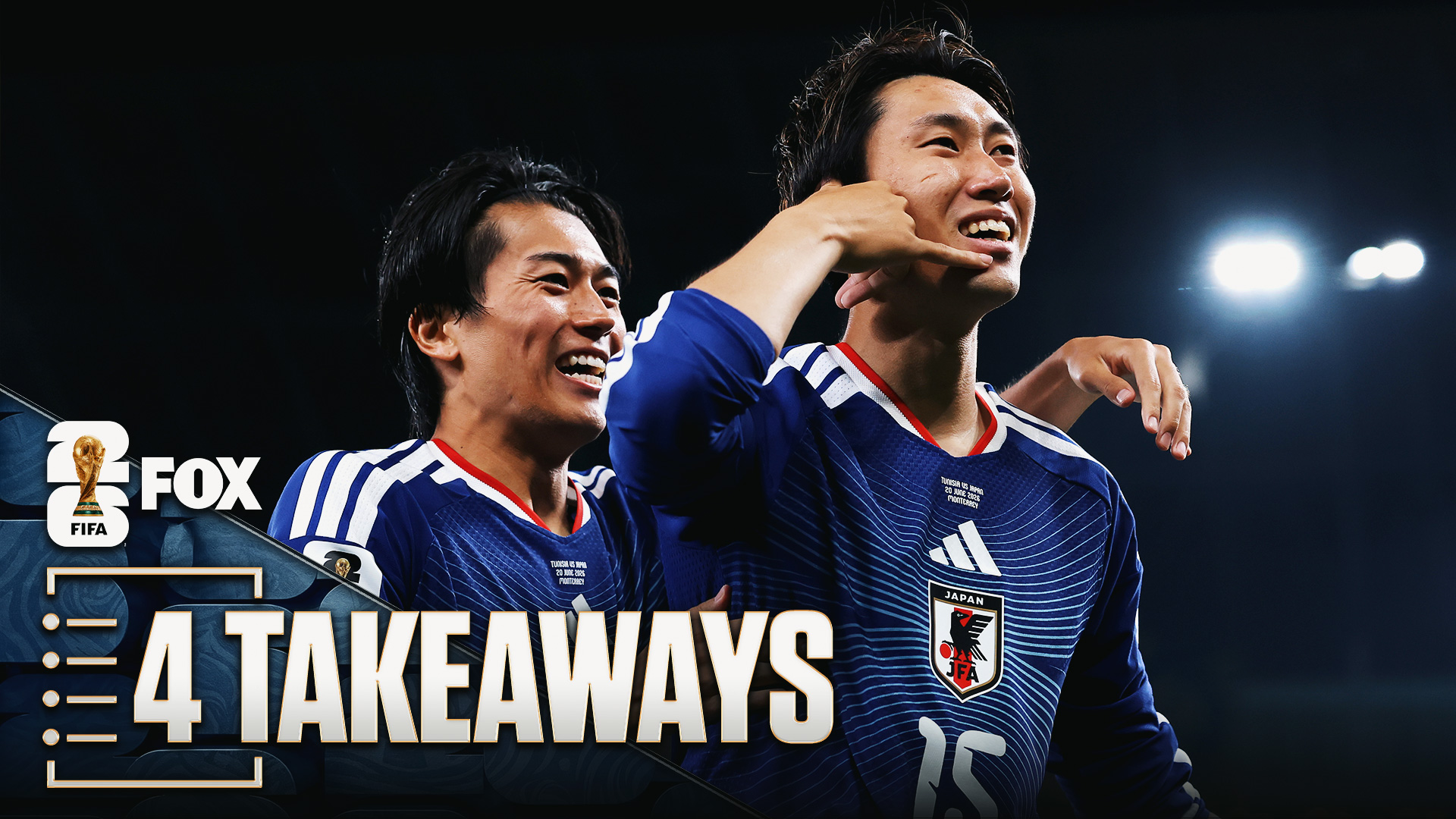
4 Takeaways From Japan's Superb Win Over Tunisia At World Cup
Japan marked the 1,000th game in men's World Cup history with a near flawless performance in a comprehensive 4-0 win over Tunisia, which was eliminated with the result. Japan showed many signs of strengths and no weaknesses as it dominated from the opening whistle. Meanwhile, Tunisia has been one of the worst and most poorly run teams through two games at the World Cup. After making a surprising coaching change after a 5-1 loss to Sweden, the Eagles of Carthage were actually worse in this game and have now been outscored 9-1 through two games. Here are my takeaways: 1. After Coaching Change, Tunisia Is Still A Mess One of the surprising stories in the group stages of the World Cup is that Tunisia fired its head coach Sabri Lamouchi after its first game. That was the quickest coaching change in World Cup history. This came after Tunisia had a very strong World Cup qualifying campaign where the Eagles of Carthage did not concede a goal across its 10 games. But its form and its confidence completely unraveled. In its final pre-tournament friendly, Tunisia was crushed by Belgium 5-0 and then, after last week's loss to Sweden, the federation decided it had nothing to lose by making a change. New head coach Herv Renard tried to take a pragmatic approach on short notice. After Lamouchi made the surprising decision to make a goalkeeping switch just before the opening game, Renard brought established veteran Aymen Dahmen back into the lineup. But ultimately, Rennards decisions did not improve the Tunisian team, as Japan was dominant from the start. Tunisias defense allowed too much space and the players intensity drained as the first half progressed. Japan out-possessed Tunisia 66-34% and completed 266 passes to Tunisia's 118. Tunisia had just two touches in Japan's box and its only shot was from outside the box, and it missed the target. In the second half, Tunisia regressed and were missing basic passes as the team attempted to build possession. Defensively, Tunisian players were failing to pick up runners and were giving up too much space. Since the 2022 World Cup, the Tunisian national team has had six different head coaches (Jalel Kadri, Faouzi Benzarti, Kais Yakoubi, Sami Trabelsi, Lamouchi, and now Renard). That has made it tough for the team to build an identity and a system around one coach. It also creates confusion and pressure on the players. Tunisia now exits this World Cup after getting severely outplayed in its first two games. It is hard to see Tunisia improving in the coming years without stability. 2. Japan Demonstrated Its Superb Tactics This was not just a collapse from Tunisia, it was also a very strong performance from Japan, which looks like a team that can progress multiple rounds in the knockout stages. In the first game, Japan looked equal to the Netherlands in a 2-2 draw. In this game, the team showed an elite instinct that is typical of top teams. Japan head coach Hajime Moriyasu had his team in a 3-4-3 formation that was very strong tactically. Up front, Japan was very good at counter-pressing and winning balls back quickly. When Tunisia was able to get the ball into the attacking half, it did little to breakdown Tunisias organized backline. Offensively, Japan was excellent at winning second balls and beginning possessions in dangerous areas. Typically, Japan was able to get the ball into wide areas where its players had one-on-one situations against isolated defenders. As was the case on the opening goal, Japan typically had committed runners in the box who were targets for crosses. But its goals were reflective of the teams tactics. In just the fifth minute, it was Daichi Kamada who made a run into the box to hammer home a ball from the right side sent in by Keito Nakamura. Kamada had previously scored the 88th minute equalizer against the Netherlands. The third goal in the 69th minute highlighted Japans ability to pass effectively out of the back, which is another of the teams strengths. Central defender Ko Itakura sent a pass to Ayase Ueda who then chipped Tunisias backline with one touch to send Junya Ito in alone, which he converted past Dahmen. Tunisia struggled immensely defending Japans passing out of the back. On the fourth goal, it was another effective use of Japan to get the ball out wide for another dangerous cross which Ayase Ueda was able to head home for his second of the night. Japan is a team that is so organized under Moriyasu and all its players are bought into the system. 3. Japan's Biggest Strength? Its Depth Another reason why Japans start to this tournament is so impressive is because of how many injuries have tested the depths of its player pool and how well the players have responded. In February, defensive midfielder and team captain Wataru Endo of Liverpool suffered a severe foot injury and had to miss this tournament. Explosive playmaker Kaoru Mitoma of Brighton suffered a hamstring injury in April which forced him out. Defenders Takehiro Tomiyasu and Koki Machida also were ruled out before the roster was named. Then in the game against the Netherlands, Takefusa Kubo picked up a knee injury. While he is expected back for the knockouts, Kubo could not play against Tunisia. Despite such a high number of injuries, the team continues to play well and not miss a beat. Part of that is due to having a tactical system that players have bought into and understand their roles. But also, this generation of Japanese players is just so deep and so talented at many, many levels. 4. Goal Differential Will Matter In Final Games The Netherlands and Japan now enter the final match day of Group F even on four points with also the same goal differential. Sweden, meanwhile, is just one point behind. Japan will now face Sweden, and the Netherlands will take on Tunisia. If Japan and the Netherlands both win these final games (where they are both favored), it will come down to a race for goal differential. That favors the Dutch because Tunisia looks very disorganized and dispirited. Japan will face a Swedish team that should be desperate for a result and will also want to manage goal differential if it falls behind. In that final game, however, Japan could make a statement and give itself momentum heading into the knockouts. Based on this game, Japan is a team that nobody wants to play.
0 Comentários
0 Compartilhamentos
17 Visualizações
0 Anterior

 Czech
Czech
 English
 Arabic
 French
 Spanish
 Deutsch
 Turkish
 Dutch
Dutch
 Italiano
 Russian
 Romaian
 Portuguese (Brazil)
 Greek
Greek