


 About SPORTIVO Network
Why an Ethical Hacking Certification Is the Smartest Cybersecurity Investment You Can Make in 2026
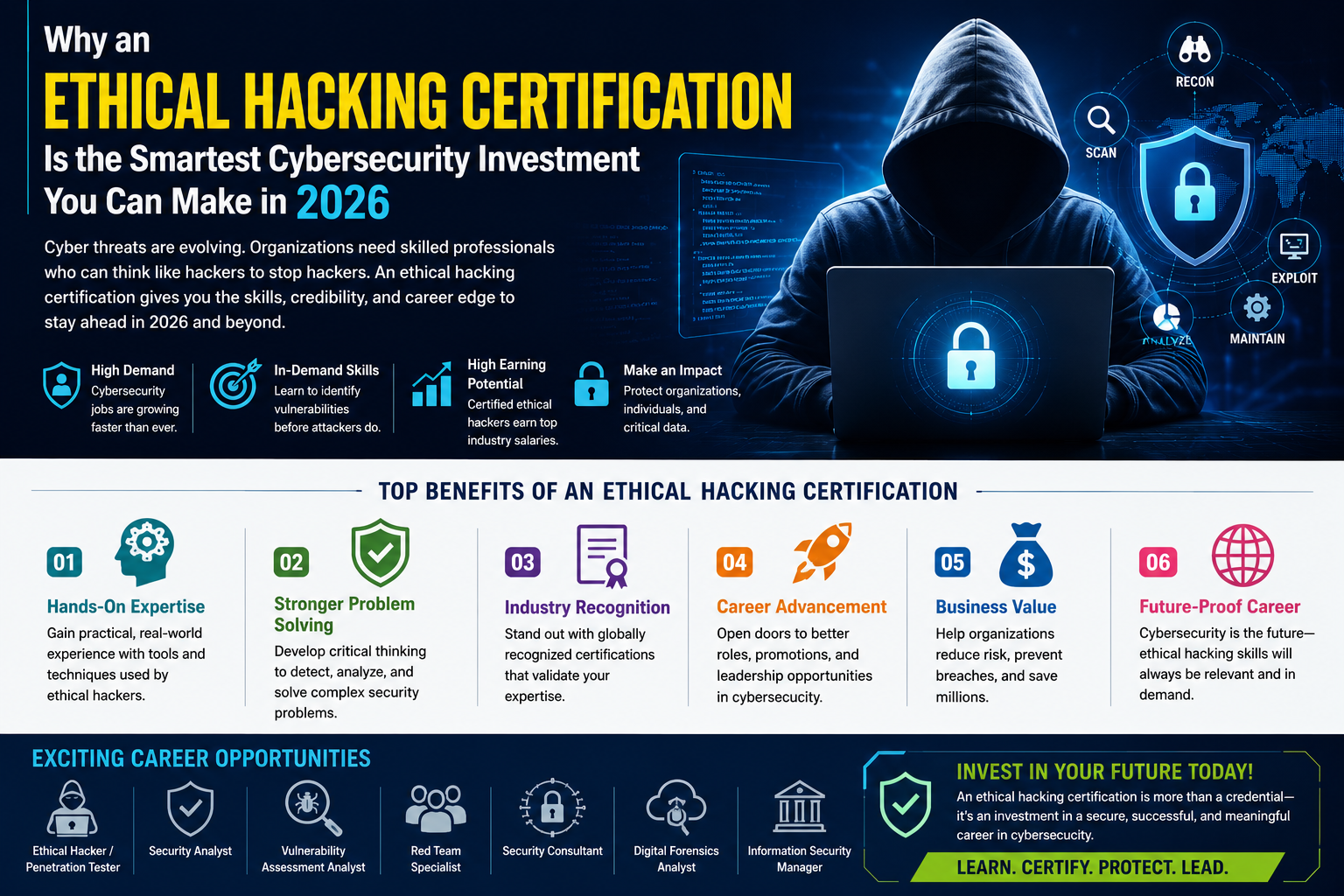
Cybersecurity has changed dramatically over the last few years. Organizations are no longer dealing with simple viruses or isolated security incidents. Today, businesses face sophisticated phishing campaigns, ransomware, credential theft, social engineering, cloud vulnerabilities, application attacks, and constantly evolving cyber threats.
As these risks continue to grow, companies need professionals who can think like attackers while working ethically to identify and fix vulnerabilities. This is where an ethical hacking certification can make a significant difference.
Among the many cybersecurity credentials available today, the CEH certification remains a popular choice for professionals who want to develop practical knowledge of ethical hacking and penetration testing. It provides a structured way to understand how attackers discover weaknesses and how security teams can defend systems against them.
Whether you are starting your cybersecurity career, working in IT, or looking to specialize in offensive security, investing in a CEH course can help you build valuable technical knowledge and demonstrate your commitment to cybersecurity.
What Is Ethical Hacking?
Ethical hacking is the authorized practice of identifying security weaknesses in computers, networks, applications, and other digital systems. Unlike malicious hackers, ethical hackers operate with permission from the organization that owns the system. Their objective is not to steal information or cause damage. Instead, they simulate potential attacks to discover vulnerabilities before real attackers can exploit them. An ethical hacker may assess areas such as:
-
Network security
-
Web applications
-
Wireless networks
-
Cloud environments
-
Mobile applications
-
Operating systems
-
Password security
-
Social engineering risks
-
Security configurations
-
Vulnerability management
This makes ethical hacking an important component of modern cybersecurity.
What Is CEH Certification?
CEH certification stands for Certified Ethical Hacker certification. It is associated with the cybersecurity field of ethical hacking and focuses on the knowledge and techniques professionals use to identify and assess security vulnerabilities. A CEH Certified Ethical Hacker understands the methodologies attackers may use to compromise systems and can apply that knowledge in an authorized security environment.
The certification covers a broad range of cybersecurity concepts, helping learners develop an understanding of how attacks work from reconnaissance through exploitation and post-attack activities. For professionals who want a structured introduction to offensive security, a CEH course can provide a useful learning pathway.
Why Is an Ethical Hacking Certification Important in 2026?
Cybersecurity is no longer an issue limited to large technology companies. Businesses of every size increasingly depend on digital infrastructure, cloud platforms, applications, remote access, and connected devices. Every additional digital system can introduce potential security risks. At the same time, cybercriminals are becoming more organized and technically capable. Organizations therefore need security professionals who can identify weaknesses proactively rather than waiting for an incident to occur.
An ethical hacker certification helps professionals understand the mindset and techniques behind cyberattacks. This perspective can be extremely valuable when designing defensive security strategies. In 2026, cybersecurity professionals who understand both attack techniques and defensive controls can bring substantial value to organizations.
1. Build a Strong Foundation in Ethical Hacking
One of the biggest advantages of pursuing a CEH ethical hacking pathway is the opportunity to develop a structured understanding of ethical hacking. Instead of learning individual tools without understanding their purpose, students can explore different stages of the hacking process and understand how various techniques fit together. A typical learning journey may involve concepts such as:
-
Reconnaissance
-
Scanning
-
Enumeration
-
Vulnerability analysis
-
System exploitation
-
Web application security
-
Network security
-
Password attacks
-
Social engineering
-
Malware concepts
-
Wireless security
This broader perspective can help learners understand cybersecurity as a complete process rather than a collection of unrelated technical skills.
2. Learn to Think Like a Cyber Attacker
A strong security professional needs more than defensive knowledge. To protect an organization effectively, it helps to understand how an attacker might approach the same environment. This is one of the fundamental ideas behind hacking CEH training. Learners explore attack methodologies so they can recognize potential weaknesses from an adversarial perspective. For example, an attacker might ask:
What systems are publicly exposed?
Which services are running?
Can weak credentials be exploited?
Is an application vulnerable to common attacks?
Can one compromised account provide access to other systems?
An ethical hacker asks similar questions but with authorization and the objective of improving security.
3. Develop Practical Cybersecurity Skills
Cybersecurity is a hands-on field. Reading about vulnerabilities is useful, but understanding how those vulnerabilities work in practical environments can be even more valuable. A good CEH course can introduce learners to tools, techniques, and methodologies used during security assessments.
Practical learning can help professionals become more comfortable with activities such as information gathering, vulnerability assessment, security testing, and analyzing potential attack paths. This experience can be particularly useful for people transitioning from general IT into cybersecurity.
4. Strengthen Your Cybersecurity Career Profile
The cybersecurity industry includes many different career paths. Professionals can specialize in areas such as penetration testing, security analysis, vulnerability management, incident response, security engineering, and security consulting. An ethical hacker certification can strengthen a professional profile by demonstrating focused interest and knowledge in offensive security.
For someone competing for cybersecurity opportunities, certifications can complement practical experience, technical projects, and other qualifications. A certification should not replace hands-on learning, but it can provide a structured framework for developing and demonstrating cybersecurity knowledge.
5. Understand Modern Attack Techniques
Cyberattacks continue to evolve. Attackers can combine technical vulnerabilities with human weaknesses to gain unauthorized access to systems. A comprehensive certified ethical hacker CEH certification pathway exposes learners to multiple categories of attacks and security weaknesses.
Understanding these techniques helps professionals recognize warning signs and think about how vulnerabilities could potentially be exploited. For example, cybersecurity professionals may need to understand:
-
Credential attacks
-
Phishing
-
Social engineering
-
Network attacks
-
Web application vulnerabilities
-
Wireless attacks
-
Malware
-
Denial-of-service concepts
-
Cloud security weaknesses
-
Vulnerability exploitation
This knowledge can contribute to stronger security assessments and better defensive planning.
6. Improve Your Penetration Testing Knowledge
Penetration testing involves authorized attempts to identify and exploit security weaknesses within a defined scope. Ethical hacking and penetration testing overlap significantly, although penetration testing is generally more structured around specific objectives, scope, and reporting requirements.
A CEH certification can help learners understand the foundations behind penetration testing methodologies. Professionals can use this knowledge to better understand how security assessments are planned, executed, documented, and communicated. The ability to identify a vulnerability is only part of the job. A cybersecurity professional must also understand its potential impact and communicate findings clearly.
7. Increase Your Understanding of Vulnerabilities
Every software application, network, device, and infrastructure environment can potentially contain weaknesses. Some vulnerabilities result from outdated software. Others can arise from poor configuration, weak authentication, insecure coding practices, exposed services, or inadequate access controls.
A certified ethical hacker learns to approach systems systematically and look for weaknesses that could potentially be exploited. This mindset can be valuable even for professionals who do not become penetration testers. Security analysts, system administrators, network engineers, developers, and security managers can all benefit from understanding how vulnerabilities are discovered and exploited.
8. Support a Career in Offensive Security
If your long-term goal is penetration testing or offensive cybersecurity, an ethical hacking certification can be a logical part of your learning journey. Offensive security roles often require knowledge across multiple technical areas. Professionals may need to understand networking, operating systems, applications, authentication, scripting, security tools, and vulnerability assessment. A structured CEH course can help bring these areas together. Potential career paths may include:
-
Ethical Hacker
-
Penetration Tester
-
Cybersecurity Analyst
-
Security Consultant
-
Vulnerability Assessment Analyst
-
Network Security Specialist
-
Information Security Specialist
-
Security Engineer
Actual job requirements vary by organization, so candidates should combine certification knowledge with practical skills and relevant experience.
9. Make Yourself More Valuable to Employers
Organizations increasingly need cybersecurity professionals who can do more than respond to alerts. Professionals who understand how attacks happen can contribute to proactive security programs. For example, an employee with CEH ethical hacking knowledge may be better positioned to participate in vulnerability assessments, security testing, penetration testing support, and security awareness initiatives.
The value of this knowledge extends beyond one specific cybersecurity role. Understanding offensive techniques can help IT professionals make better decisions when configuring networks, developing applications, managing identities, and protecting infrastructure.
10. Stay Relevant as Cyber Threats Evolve
Cybersecurity is not a field where learning stops after earning one qualification. New technologies create new security challenges. Cloud computing, artificial intelligence, APIs, mobile applications, remote work environments, and connected devices all introduce evolving attack surfaces. For this reason, cybersecurity professionals need a continuous learning mindset.
Starting with an ethical hacker certification can establish a foundation from which professionals can continue developing specialized expertise. The most successful cybersecurity professionals tend to treat certifications as milestones rather than final destinations.
What Can You Learn in a CEH Course?
The exact curriculum can vary depending on the training provider and current certification version, but an effective CEH course typically covers a broad range of ethical hacking concepts. Students may encounter topics involving:
Reconnaissance and Information Gathering
Before attempting an attack, attackers often gather information about their targets. Ethical hacking training teaches learners why information gathering matters and how exposed information can create security risks.
Network Scanning
Scanning can reveal hosts, ports, services, and other technical information. Understanding scanning techniques helps security professionals identify potentially exposed systems.
Vulnerability Assessment
Security professionals need to determine whether systems contain weaknesses that could create meaningful risk. Vulnerability assessment is therefore an important part of ethical hacking.
Web Application Security
Modern businesses rely heavily on websites and web applications. Understanding common web application vulnerabilities is increasingly important for cybersecurity professionals.
Wireless Security
Wireless networks introduce their own security considerations. Ethical hacking training can help professionals understand potential wireless attack techniques and appropriate defensive measures.
Social Engineering
Technology is only one part of cybersecurity. Attackers may manipulate people into revealing information or performing actions that weaken security. Understanding social engineering helps professionals recognize human-centered security risks.
Is CEH Certification Worth It in 2026?
For many aspiring cybersecurity professionals, CEH certification can be a worthwhile investment particularly when it is combined with hands-on practice and broader technical education. Its value depends on your career goals, existing experience, and how effectively you apply what you learn. If you are completely new to cybersecurity, the certification can provide a structured introduction to ethical hacking concepts.
If you already work in IT, it can help you transition toward security-focused responsibilities. If you are already working in cybersecurity, it may help formalize knowledge that you have developed through professional experience. The key is to avoid treating the certificate itself as the end goal. The real value comes from the knowledge, methodology, and practical understanding developed during the learning process.
How to Get the Most From Your Ethical Hacking Training
Simply completing training materials is not enough to become a capable security professional. To maximize the value of your CEH Certified Ethical Hacker learning journey, combine theoretical knowledge with practical exercises.
Build security labs where you can safely practice authorized testing techniques. Study networking fundamentals. Learn how operating systems work. Explore scripting and automation. Analyze vulnerabilities and understand why they exist. You should also develop strong documentation skills. A professional security tester must be able to explain:
-
What vulnerability was discovered?
-
How was it identified?
-
What systems are affected?
-
What could happen if it were exploited?
-
How serious is the risk?
-
What remediation should be considered?
Technical knowledge becomes much more valuable when you can communicate findings clearly.
Why Choose GI Intelligence for CEH Training?
If you are looking for structured training to develop your ethical hacking skills, GI Intelligence offers a dedicated CEH Ethical Hacking Certification course designed for professionals and learners who want to build cybersecurity expertise.
Choosing the right training provider is important because effective cybersecurity education should go beyond memorizing terminology. Learners should develop an understanding of ethical hacking methodologies, cybersecurity concepts, attack techniques, and how security weaknesses can be assessed responsibly. GI Intelligence provides an option for learners who want to pursue structured ethical hacking certification training and strengthen their professional cybersecurity knowledge.
Who Should Consider a CEH Course?
A CEH course can be suitable for a variety of learners, including:
-
IT professionals moving into cybersecurity
-
Network administrators
-
System administrators
-
Cybersecurity beginners
-
Security analysts
-
Network security professionals
-
IT managers
-
Penetration testing enthusiasts
-
Security consultants
-
Students interested in cybersecurity careers
You do not necessarily need to become a full-time penetration tester to benefit from ethical hacking knowledge. Understanding how attackers operate can improve security awareness across many technology-related careers.
Ethical Hacking vs. Malicious Hacking
The biggest difference between ethical hacking and malicious hacking is authorization and intent. A malicious hacker attempts to access systems without permission and may steal data, disrupt operations, install malware, or cause financial damage. An ethical hacker operates within an agreed scope and receives permission to test systems.
The purpose is to discover weaknesses so they can be addressed before criminals exploit them. This distinction is fundamental. Ethical hacking should always be performed responsibly and within the legal boundaries defined by the organization or system owner.
The Long-Term Value of Becoming a Certified Ethical Hacker
Cybersecurity is likely to remain an important business priority as organizations continue expanding their digital infrastructure. A certified ethical hacker can contribute to security by approaching systems from an attacker's perspective while maintaining a defensive objective. The long-term value of ethical hacking knowledge comes from its versatility.
You can use it to understand vulnerabilities, improve security assessments, support penetration testing, communicate security risks, and develop a stronger overall cybersecurity mindset. For ambitious IT professionals, that combination can create a solid foundation for continued career development.
Final Thoughts: Is an Ethical Hacking Certification a Smart Investment?
Cybersecurity threats are becoming increasingly sophisticated, and organizations need professionals who understand how attacks work not just how to respond after an incident occurs. That is why an ethical hacking certification can be a smart investment in 2026.
A CEH certification can provide structured knowledge of ethical hacking methodologies, vulnerabilities, attack techniques, security assessment concepts, and the mindset required to approach systems from an adversarial perspective.
Whether you are beginning your cybersecurity journey or looking to strengthen your existing IT career, a CEH course can help you develop knowledge that is relevant across numerous security roles.
Ultimately, becoming a Certified Ethical Hacker CEH is not simply about adding another credential to your résumé. It is about developing the ability to identify weaknesses before malicious attackers can exploit them and using that knowledge to build safer, stronger digital environments.

 Czech
Czech
 English
 Arabic
 Spanish
 Portuguese
 Deutsch
 Turkish
 Dutch
Dutch
 Italiano
 Russian
 Romaian
 Portuguese (Brazil)
 Greek
Greek